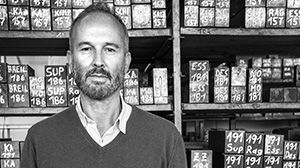
Erwin Wurm is one of those artists who have made a globally recognised autonomous contribution to an international tendency, namely to the performative turn of sculpture, or sculpture as a form of action. Photography and video have become the medium of sculpture, and sculpture itself has become a utilitarian object. Classical sculpture was a three-dimensional object on a pedestal. Wurm first reinterpreted and reworked the classical criteria of sculpture -- volume, weight, statics, gravity, form, mass. He photographically captured people and their interactions with everyday objects in unusual positions that they can only hold for a minimal period of time. With these now famous One-Minute-Sculptures, he turned the audience into participants in the creation of sculpture and transformed sculpture into an open field of action. He ultimately offered the audience the opportunity to create sculptures in the museum space by means of various sets of instructions. The participation of the audience is required; their actions determine the form of art. Wurm subversively encourages the individual to take part in social action. Which is to say: active art instead of passive consumption. In precarious times marked by crises, such a turn of culture can release energies in a society that have the potential to resolve conflicts. Wurm has continuously demonstrated that he is able, in a genuinely artistic way -- sometimes sublime, often philosophical -- to find a response to the moods
ERWIN WURM
and social conditions of the times in images and objects. In his work, which revolves around an expanded concept of sculpture using the most diverse materials and media, Wurm explicitly references the traditions of the international avant-garde, where provocation and a willingness to take risks are always present. In his most recent groups of works, we can see the transfer of insights gained from the action sculptures back to static objects. In doing so, he achieves spectacular signatures such as the house on the house or the boat on the roof of the house. With his architectural interventions and large-scale sculptures, particularly in public spaces, Wurm has opened up new options in the field between sculpture and architecture. What often appears playful in Wurm's work is, however, more than an aesthetic strategy. The oversized police cap from 2010 is not only a biographical reference to his father's profession as a policeman, but also a precise sculptural translation of the themes of authority and surveillance. He has also optimally transformed the confinement of the petit-bourgeois family into sculpture through his attention-grabbing "narrow house" (Venice Biennale, 2011). All of his works point to a critical, media-analytical way of thinking about the concept of sculpture, as he crosses the boundaries between object and performance, between architecture and design, between sculpture and photography, between artist and audience. His works therefore also offer a broad basis for reflection on socio-cultural and socially relevant issues.