
The Austrian Pavilion, with its equally classical and modern formal language, is an ideal exhibition space and one of the most significant pavilions in the Giardini. At the first International Art Exhibition in Venice in 1895, the Central Pavilion served as the shared exhibition space for all fourteen participating nations. With the opening of the Belgian Pavilion in 1907, the construction of individual national pavilions in the Giardini della Biennale began. Austria first expressed its intention to build its own pavilion as early as 1910, but it was not until 1934 that the plan was realized and the Austrian Pavilion, designed by architects Josef Hoffmann and Robert Kramreiter, was officially opened on May 12, 1934. After the annexation by Germany in 1938, the Austrian Pavilion was put up for sale and temporarily used as storage by the Italian film industry Cinecittà, while Austrian artists exhibited in the German Pavilion. It was only in 1948, with the resumption of the Biennale after World War II, that Austria returned to its own national pavilion. In 1954, the sculpture courtyard was enlarged, and in 1956 a small office/storage space was added. In 1984, exactly 50 years after its construction, the pavilion was thoroughly renovated under the direction of Hans Hollein, who carried out a careful restoration to its original condition; instead of the glass doors (main portals) installed in the 1950s, roller shutters were once again installed in the spirit of Hoffmann.
Pavilion
For the contribution of Brigitte Kowanz, the pavilion was extended this year with an annex designed by architect Hermann Eisenköck – the so-called “Light Space”.
The pavilion is protected as a historical monument under Italian law and is managed by the Austrian Federal Chancellery, Section for Arts and Culture.


Austrian Pavilion
Copyright: Archiv HZ, Georg Petermichl
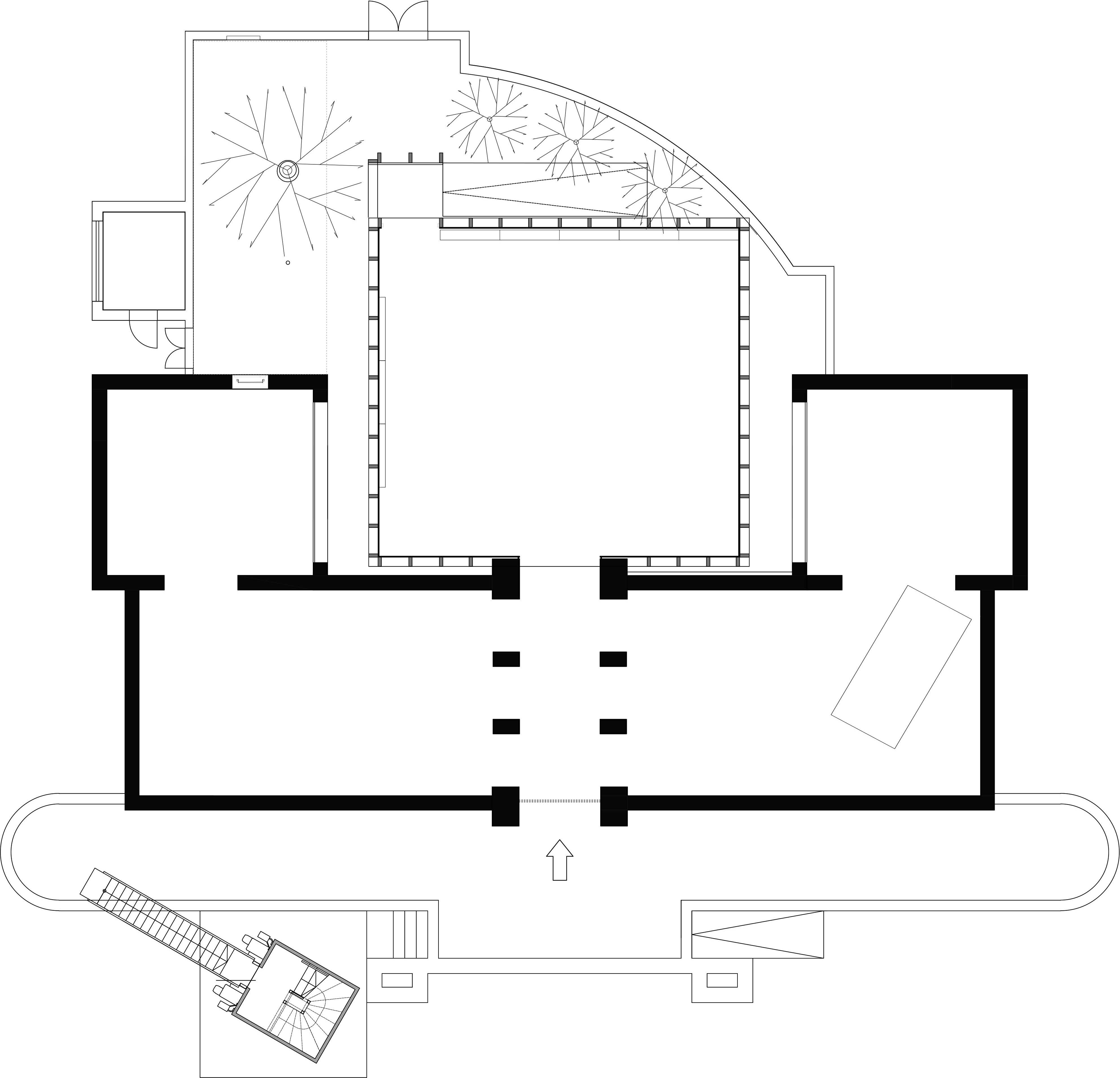
Floor plan of the Austrian Pavilion with „Light Space“ extension
Copyright: Architektur Consult
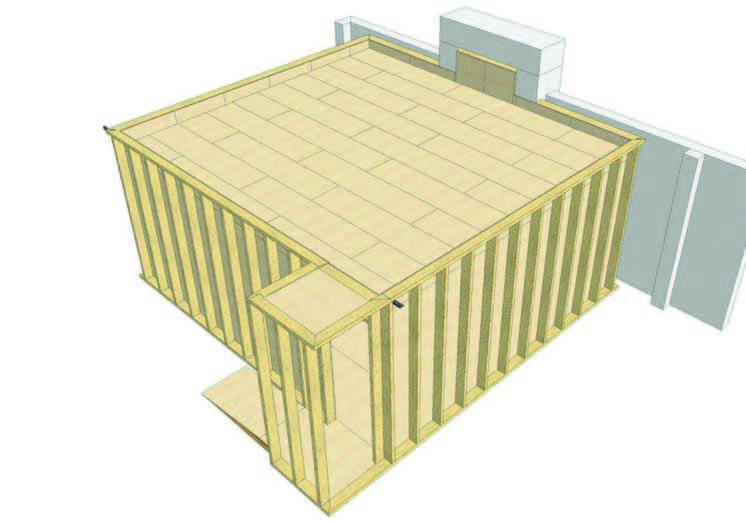
„Light Space“ Extension
Design: Architektur Consult, DI Hermann Eisenköck
Construction: Lottermoser
Wood Sponsorship: proHolz Salzburg
Copyright: Architektur Consult